For Immediate Release -
1/30/2008
Presidio Trust to Pursue Contemporary Art Museum and History Center
Page Image
Page Content
Presidio of San
Francisco (January 30, 2008) -- The Presidio Trust today announced its intention
to move discussions forward with Doris and Don Fisher on the creation of
a new contemporary art museum in the Presidio.
The Trust also
announced that it will dedicate $5 million for the development of a
history center and program which will highlight the national park’s deep
historic significance as an important settlement for indigenous
peoples, the birthplace of San Francisco, and as the seat of U.S.
military power in the western states.
"We are pursuing not one,
but two exciting initiatives that will revitalize the Presidio as a
center for culture and history and bring a new sense of excitement to
this beloved and beautiful place,” said Craig Middleton, executive
director of the Presidio Trust. “These undertakings are in no way
mutually exclusive. Both will bring enormous benefits to the park. They
are great for the Presidio, the public, and the city of San Francisco.”
The
Trust will work to raise additional funds for the center and to develop
programs that introduce students, the general public, and international
visitors to the Presidio and its history.
The museum, dubbed the
Contemporary Art Museum at the Presidio (CAMP), was proposed in 2007 by
the Fisher family, founders of The Gap, to house their internationally
renowned collection of contemporary and modern art. The Fishers will pay
for CAMP's design and construction and have established a foundation to
manage their collection and run the museum.
"For Doris and me
this is a dream-come-true," said Don Fisher, a life-long Presidio
neighbor. "The Presidio is a gem in the heart of one of the world's most
magnificent cities, and we are honored to have the opportunity to give
something back to the city that we love."
The CAMP proposal led
to the Presidio Trust releasing a Request for Proposals, or RFP, for
cultural institutions to be located at the Presidio's Main Post. The RFP
included the opportunity for a new building south of the Parade Ground,
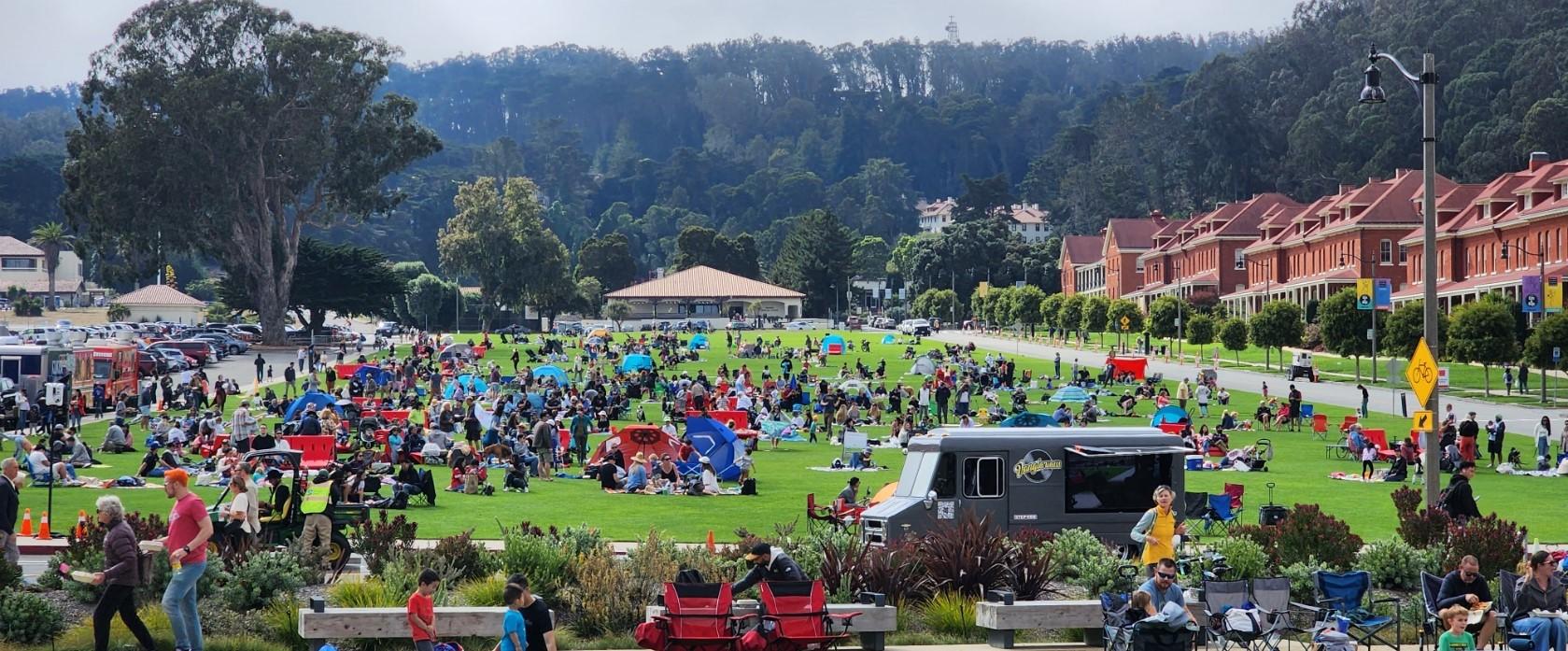
the Main Post's principle open space. Three of the 19th century
red-brick barracks buildings that flank the Parade Ground were also
included in the offering.
In response to the RFP, the Trust
received two proposals for new construction – the CAMP proposal and a
proposal to construct a history center. The CAMP response was submitted
with a substantive funding plan and organization to run the museum. The
history center's proponent, the non-profit Presidio Historical
Association, did not identify financing for its proposal. Further, the
Association’s proposal recommended that a different body be created to
oversee fundraising and program development for the history center.
"The
Trust believes the Presidio Historical Association's ideas have great
merit and we have been working for a number of years to make the history
of the Presidio more accessible to the public," Middleton said. "We are
committed to establishing a state-of-the art history center. We will
work with the Presidio Historical Association, historians and other
experts in the field, and the general public to develop a great history
center and program at the Presidio."
Both the art museum and the
history center will be subject to an extensive and thoughtful public
environmental review process that will include vigorous environmental
studies, design review, and public comment. The location, design, size,
and configuration of both projects will be subject to this process. No
final decisions on either project will be made until the environmental
process is concluded.
The CAMP proposal includes a museum that
would allow the public to not only view the Fisher's own collection of
more than 1,000 masterworks but to also view traveling shows and
exhibitions. The museum would also have a greater percentage of gallery
space than most museums.
The Fisher collection includes works
from artists such as Gerhard Richter, Richard Serra, Alexander Calder,
Ellsworth Kelly, Richard Diebenkorn, Cy Twombly, Roy Lichtenstein, Andy
Warhol, Chuck Close, Willem DeKooning, Brice Marden, Agnes Martin,
Anselm Kiefer.
The Trust’s vision for the history center and
program is to create a history orientation center and a “museum without
walls” in the Presidio’s Main Post, which is the heart of the park and
its most historic district. The program would comprise historic
buildings and landscapes, and will have a “walk through time” as a
central feature. The walk through time is being designed as a pedestrian
promenade along the Main Parade that will eventually traverse the park
from the bay to the Officer’s Club. From that central path, other paths
will lead into the park, connecting to a new network of trails that is
being funded with a gift from the Evelyn and Walter Haas, Jr. Fund.
The
Main Parade will also be relandscaped in the course of the
revitalization plans for the Main Post and will become a 7-acre green
with views of the bay, the headlands, and the city. “We believe that the
Main Parade will be a grand and fitting backdrop for programs that
explore the history of the Presidio as well as those that reflect our
own time,” said Middleton. “The history of the Presidio is a history of
change – it is a place that has changed over time to meet the needs of
the community. Today, we believe that as a unique national park, it can
serve the community as a center for history and culture.”
The
Presidio Trust was established by the United States Congress in 1996 to
manage the Presidio of San Francisco, a former military post located at
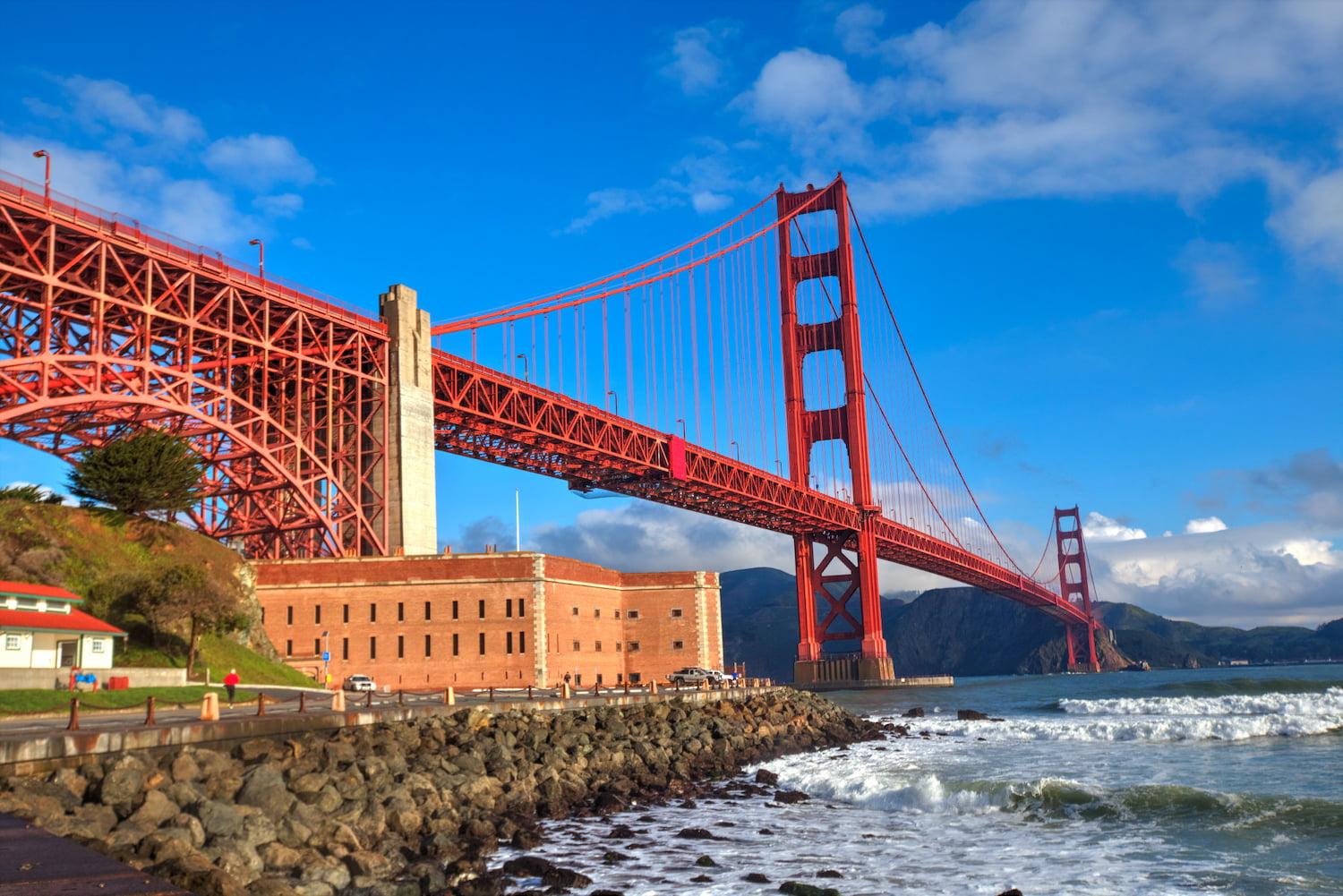
the southern anchor of the Golden Gate Bridge. The 1,500-acre site
contains the infrastructure of a small city as well as expansive open
space, a 300-acre historic forest, spectacular views, and rare and
endangered plants and wildlife. It comprises nearly 6 million square
feet of buildings, including 469 historic buildings that contribute to
its status as a National Historic Landmark District.